
ISSN: 2286-7511
E-ISSN: 2287-0113
The Anti-Trafficking Review promotes a human rights-based approach to anti-trafficking. It explores trafficking in its broader context including gender analyses and intersections with labour and migrant rights.
ISSN: 2286-7511
E-ISSN: 2287-0113
The Anti-Trafficking Review promotes a human rights-based approach to anti-trafficking. It explores trafficking in its broader context including gender analyses and intersections with labour and migrant rights.
Migrant domestic workers (MDWs) are essential to Hong Kong’s care economy yet remain structurally vulnerable to exploitation. While existing research has focused primarily on workers’ experiences, less attention has been paid to employers’ attitudes and practices and how they shape employment. Drawing on an intersectional framework, this article examines how gendered, racialised, and migrant inequalities shape employers’ attitudes towards MDWs and their engagement in exploitative practices. Based on 306 surveys and 15 semi-structured interviews with employers of MDW, we find that exploitative practices are associated with prejudicial, exclusionary, and controlling employer attitudes, revealing how racialised perceptions and restrictive migration regimes are translated into everyday practices of subordination. We demonstrate that exploitation frequently coexists with appreciation, gratitude, and dependence on caring labour, challenging assumptions that positive interpersonal relationships protect workers from exploitation. These findings contribute to debates on care work, intimate labour, and exploitation by showing how domestic work blurs boundaries between work and private life and how emotional intimacy and familial appreciation can coexist with structural inequality and control over workers’ autonomy. Exploitation is further shaped by gendered power relations, care responsibilities, economic pressures and household circumstances, highlighting how exploitation and care work are embedded within wider social and structural inequalities.
Keywords: migrant domestic workers, care work, employers, exploitation, attitudes, perceptions, Hong Kong
Suggested citation: I M Wilson and Y P Sari, ‘Between Appreciation and Exploitation: Employer perceptions, attitudes, and household dynamics in Hong Kong’s domestic work sector’, Anti-Trafficking Review, issue 27, 2026, pp. 102–127, https://doi.org/10.14197/atr.201226276
Migrant domestic workers (MDWs) have played an essential role in sustaining households in the Hong Kong Special Administrative Region of the People’s Republic of China (hereafter: Hong Kong) since the 1970s, providing childcare, elder care, and household labour, and enabling local families, particularly dual-income and middle-class households, to maintain their livelihoods.[1] Despite their indispensable contributions to Hong Kong’s social and economic functioning, MDWs remain structurally marginalised and excluded from full labour protections.[2] Existing research consistently documents their vulnerability to exploitation, stemming from an intersection of restrictive immigration policies, mandatory live-in requirements,[3] weak enforcement of labour standards, and a long history of racialised and gendered stereotypes surrounding domestic work.[4] These conditions create environments in which excessive overtime, surveillance, wage deductions, and limitations on freedom of movement are normalised, and where risks of forced labour, abuse, and rights violations remain deeply entrenched.[5]
While the vulnerabilities of MDWs are well established, far less is known about the attitudes and perceptions of employers. Yet these individuals directly shape the workers’ experiences within the household. Public attitudes towards migrant workers in Asian contexts are often marked by mistrust, stereotypes, and perceptions of cultural threat, which can translate into discriminatory behaviour and harmful labour practices.[6] In Hong Kong specifically, portrayals of MDWs continue to draw from historical notions of servitude and hierarchies related to race, class, and nationality.[7] These social narratives influence not only societal discussions but also employers’ expectations and treatment of the workers they hire. Understanding employer attitudes is essential in explaining why exploitative conditions persist despite existing legal frameworks and contractual obligations. Yet empirical research on employers’ perspectives remains limited in Hong Kong. This article addresses this gap by examining how employers perceive and interact with MDWs, and how their attitudes shape employment practices, conflict dynamics, and exploitative behaviour. Drawing on a mixed-methods design, we integrate findings from a survey of 306 employers and 15 semi-structured interviews to explore how employer attitudes and broader structural influences, such as economic pressures, gender roles, and social norms, shape the treatment of domestic workers.
We find that employers reporting exploitative practices are more likely to hold prejudicial, exclusionary, and controlling attitudes towards MDWs, demonstrating that negative perceptions contribute to exploitative behaviour. Further, restrictive migration governance frameworks and racialised perceptions of MDWs are reflected in societal attitudes and translated into everyday practices of control, exclusion, and discipline within households. MDWs’ experiences are shaped by overlapping forms of disadvantage that place them in structurally unequal relationships with employers, reinforcing their vulnerability to labour exploitation.[8] Exploitation is also associated with broader structural pressures, including gendered power relations, care responsibilities, economic strain, and household circumstances. We demonstrate that financial pressures are linked to exploitation, with higher rates reported among middle-income households, those with elder care responsibilities, and those living in smaller homes. Female employers reported greater appreciation for MDWs and lower rates of severe exploitation, suggesting that gendered experiences of care shape perceptions and treatment of workers. Recognition of MDWs’ contributions and positive perceptions coexisted with expectations of obedience, restrictions on autonomy, and exploitative practices, challenging the assumption that positive interpersonal relationships protect against exploitation, and revealing how appreciation and control interact in employment relationships. We demonstrate that prejudicial views towards MDWs relate directly to exploitative treatment but coexist with a dependence on caring labour and even gratitude, while being underpinned by employers’ control over workers’ personal autonomy. This complex mix of familial appreciation, exploitation, and control shows domestic work as a form of intimate labour, which blurs the boundaries between employment and private life, such that emotional intimacy and structural inequality coexist. Our findings have important implications for labour policy, rights-based reforms, employer education, and broader efforts to challenge the social norms and structural conditions that sustain exploitative labour relations.
Since the 1970s, residents of Hong Kong have been hiring MDWs to assist with caregiving, cooking, and household labour.[9] MDWs play a vital role in supporting households yet are often undervalued and viewed as outsiders. Despite their substantial contributions to the city’s economy, they remain excluded from full economic rights and permanent residence.[10] Their informal, private, and underregulated workplace renders them vulnerable to exploitation and abuse.[11] The legal requirement that MDWs live in their employers’ home exposes migrant workers to forced overtime, inappropriate accommodation, lack of rest days, insufficient food, and lack of privacy.[12] The conflation of housekeeping and caring labour further puts them at higher risk of excessive overtime and exploitation.[13]
Although Hong Kong provides MDWs with a standard employment contract, minimum wage, weekly rest day, and employment protections, structural vulnerabilities remain. The minimum allowable wage is below the statutory minimum wage, and the absence of limits on working hours exposes workers to excessive overtime.[14] Despite legal restrictions on wage deductions, some MDWs continue to report salary withholding and debt bondage.[15] It is well evidenced that women, who make up the majority of MDWs, are also at increased risk for sexual harassment, gender-based violence, and abuse, particularly in isolated, home-based working environments.[16] Intersecting inequalities linked to immigration status, ethnicity, gender, and live-in requirements have also been consistently identified—in research in Hong Kong and other jurisdictions—as restricting access to justice. These vulnerabilities are reinforced by tied visa arrangements that link workers’ immigration status to a specific employer.[17] The ‘two-week rule’ further limits workers’ ability to leave abusive employment, as failure to secure a new employer within two weeks may result in deportation.[18]
It is important to distinguish between systemic, state-enabled forms of labour exploitation and the legal category of forced labour. Although these conditions create vulnerability and unequal power relations, they do not necessarily meet the legal definition of forced labour, which requires involuntariness and the menace of penalty.[19] As Quirk, Robinson, and Thibos argue, an exclusive focus on trafficking and forced labour obscures the broader systems and labour arrangements that generate exploitation.[20] Accordingly, we conceptualise exploitation as a continuum rather than a binary condition, recognising that MDWs may experience everyday forms of control and constrained autonomy arising from structural arrangements, including migration policies, employer dependency, and live-in requirements, which normalise exploitative practices and create conditions in which more severe forms of coercion can occur.[21] This article, therefore, is not concerned with forced labour specifically but instead examines forced labour indicators defined by the International Labour Organization (ILO), including restriction of movement, intimidation and threats, physical violence, retention of documents, abusive working and living conditions, and excessive working hours, as indicators of severe exploitation and psychological coercion.
Attitudes towards immigrants and immigration are an important indicator of the experiences of and responses to migrant workers in society.[22] Research shows that the public generally holds negative attitudes towards migration and migrant workers, even though there is a strong demand for ‘low-skilled’ workers in destination countries.[23] For example, in some Asian countries, such as Malaysia, Singapore, Japan, Thailand, and China, public opinion often portrays migrant workers as more prone to criminality than the general population, depicting them as troublemakers and characterising them as uneducated, ignorant, unkempt, and socially undesirable.[24] An ILO study in 2019 found that the presence of migrant workers can be perceived to threaten a country’s culture and heritage to varying but high degrees, for example, in Malaysia (68% of respondents), Thailand (58%), Singapore (53%), and Japan (41%).[25] Similarly, separate research in Singapore reported that migrant workers are perceived by citizens as a ‘blight’ on the country’s pristine image.[26] Such attitudes have a range of consequences, including discrimination, exploitation, and even violence against migrant workers,[27] impacting migrants’ reception in host countries[28] and enabling stricter labour migration policies.[29] At the same time, these views often negate or neglect the significant positive contributions migrant workers make to their host economies and societies.[30]
MDWs make up about 4 per cent of Hong Kong’s total population, with the majority coming from Indonesia and the Philippines. Research indicates that while their migration leads to an increase in earning power, this is often offset by a loss in racial and class status.[31] Public sentiment ascribes MDWs both positive and negative attributes. They are positively portrayed as hardworking, family-oriented women who have made significant sacrifices for the benefit of Hong Kong society. On the other hand, negative portrayals depict them as greedy, uncaring, and unappreciative of the opportunities available to them in Hong Kong.[32] Prior studies document that MDWs are widely perceived as dependent, poor, and vulnerable.[33]
Palmer describes how stereotypes of Indonesian MDWs in Hong Kong are reinforced by employment agencies, employers, and government officials. Indonesian workers are often portrayed as more ‘flexible’ and compliant, shaping employer expectations around long working hours and obedience. Government officials in Hong Kong mostly encounter Indonesian MDWs in relation to labour, immigration, and criminal complaints as well as concerns reported by employers, likely shaping attitudes and reinforcing stereotypes.[34] Indonesian MDWs have also been described as Hong Kong’s most ‘isolated and exploited’ minority.[35] By contrast, Filipinas are frequently viewed with suspicion, assumed to be seeking relationships to secure financial stability, and stereotyped as flirtatious or promiscuous. They are frequently placed in a morally questionable category and associated with sex workers.[36] One study found that Chinese students in Hong Kong characterised Filipina MDWs as ‘noisy’, ‘unfriendly’, and ‘cunning’, and as thieves and cheaters.
Race and lower socio-economic status seem to be a frequent basis for casual discrimination and prejudice.[37] Social exclusion and stigmatisation of MDWs has arguably been driven by bigotry and a societal need to maintain an ‘ideological system of discrimination’.[38] Societal exclusion is reinforced by differing regulations governing the legal and employment status of MDWs, such as visas being tied to employers, which contributes to unequal power distribution between workers and employers. Our research sought to understand how these structural factors and prejudices are reflected in employer attitudes and the effect that discriminatory attitudes have on the treatment of MDWs in the workplace.
Our study utilised a multi-method approach, encompassing primary and secondary data collection. Primary data collection was mixed-method, comprising a survey and semi-structured interviews with employers, which complemented the literature review. We obtained ethics approval from the University of Hong Kong Human Research Ethics Committee (HREC) (Reference Number: EA240542) to conduct both stages of this research.
To understand the perceptions and attitudes of MDW employers in Hong Kong, surveys were conducted with 306 MDW employers. A simple random sampling approach was used to identify employers for inclusion within the survey, via Foreign Domestic Helper (FDH) employment agencies in Hong Kong. The sampling frame was a comprehensive list of 1,694 employment agencies, from which a random sample of 500 was drawn. The large sample was drawn to accommodate a higher refusal rate, which was expected. The research team contacted all 500 employment agencies by phone to ask them to distribute the 15-minute online survey. Of the randomised sample, enumerators were able to reach 45% (n=223) of employment agencies by phone. Of those, 6% (n=14) agreed to participate, 30% (n=67) were unsure, and 64% (n=142) refused. Enumerators worked on refusal conversion by contacting employment agencies that refused by email. They conducted in-person visits to provide more information to all employment agencies that were unsure. An additional 8 employment agencies were recruited this way, resulting in a total of 10% (n=22) of reached employment agencies agreeing to participate; this enabled the research team to recruit 306 employers. To facilitate recruitment, participants who completed the 15-minute online survey received HKD 100 (approximately USD 12.75) as compensation for their time and effort. Because the employer participants were not from disadvantaged or otherwise vulnerable populations, we considered these incentives to be appropriate compensation rather than coercive. Cash payments were provided instead of vouchers because they were easier to transfer remotely, as all data collection was conducted without face-to-face contact. All surveys were available in both English and Cantonese.
A purposive sampling approach was utilised to select participants for semi-structured interviews. At the conclusion of the survey, respondents were asked whether they consented to being contacted for a follow-up interview. Because survey responses were reviewed to identify participants with differing attitudes and reported practices towards MDWs, survey data were not fully anonymised during the recruitment stage. Rather, survey responses were linked to respondents’ contact information for the limited purpose of participant selection and follow-up. Following recruitment, identifying information was removed from interview transcripts, and reporting and contact information were stored separately from research data to protect participants’ confidentiality. In total, 15 employers were selected from the survey sample for semi-structured interviews. Participants representing a range of perspectives were intentionally recruited—including those reporting predominantly positive attitudes and employment practices as well as those reporting exclusionary attitudes, exploitative practices, and violence—to facilitate comparison across groups. Semi-structured interviews, lasting approximately one hour, were conducted via Zoom in English and Cantonese. Participants received HKD 200 in recognition of their time.
The majority of surveyed employers (72.9%) were 30–49 years of age. There was a pronounced gender imbalance among the sample of employers, with women constituting 71.6% of survey respondents compared to just 24.8% men and 1% non-binary people.[39] In terms of employment status, most participants reported being company employees working for others (52.9%), while smaller segments were employers (15%) or self-employed (14.7%). Hong Kong nationals comprised the majority (61.1%) of participants, with other significant groups coming from India (6.9%), the United Kingdom (6.2%), and Australia (5.2%). The education level of survey respondents was notably high: 79.8% held tertiary qualifications, with 42.2% holding bachelor’s degrees and 37.6% holding postgraduate or higher degrees. Income distribution skewed towards high-income employers, with the largest proportion (24.8%) reporting a monthly household income of HKD 200,000–500,000 (USD 25,500–63,750) or more, followed by HKD 60,000–99,999 (USD 7,650–12,750) (23.5%).
For survey data, descriptive and bivariate analyses were conducted to provide an overview of employers, including key demographics and group differences by income, gender, and nationality. Differences between employers who reported more ethical behaviour and those who reported exploitative and violent behaviour were considered in the analysis. The analysis provided an overview of employer demographics, migrant sentiment, attitudes towards their domestic workers, employment practices, conflict management, violence, challenges, and barriers. We adopted Braun and Clarke’s method for conducting thematic analysis,[40] which includes familiarising with the data; developing an initial list of codes; finding, reviewing, and defining key themes; and writing up the findings.
Challenges of the study included securing honest responses from employers, particularly regarding sensitive questions. To mitigate this, we included a data quality measure in the survey to monitor random responses and invited survey respondents to participate in follow-up interviews. We faced challenges recruiting employers who reported violence for semi-structured interviews. For those we did recruit, enumerators were trained to use probing questions to encourage employers to share freely. Despite this, exploitation and violence were likely still under-reported.
This research was high-risk in nature because it involved interviewing employers about their perceptions and treatment of MDWs. Participants could disclose behaviours that contravene employment laws or ethical standards, creating legal, reputational, and confidentiality risks. There was also a risk that breaches of confidentiality could have adverse consequences for both participants and the MDWs discussed during the interviews. In addition, the research posed risks to the researchers, including potential psychological distress from hearing accounts of exploitation or abuse. These factors presented ethical challenges relating to participant confidentiality, data security, researcher well-being, and the management of disclosures of potentially illegal or harmful conduct.
Accordingly, a range of measures were implemented to minimise risks and ensure the ethical conduct of the study. Interview questions were designed to explore attitudes and experiences rather than investigate specific incidents, and they were framed to minimise the collection of unnecessary identifying information regarding specific workers, households, or incidents. Particular attention was paid to protecting the privacy of MDWs discussed during interviews; their names or other direct identifiers were not recorded.
Given the sensitive nature of discussions, questions were designed to focus on participants’ experiences, perspectives, and decision-making processes without encouraging discriminatory or harmful statements. To mitigate the risks of participants feeling judged or becoming defensive, they were advised that some questions might cause discomfort and were reminded that they could decline to answer any question or discontinue participation at any time without consequence.
Enumerators received training in conducting sensitive interviews; responding to participant distress; maintaining neutrality; avoiding collecting information that could increase legal, reputational, or privacy risks; and managing disclosures of exploitation or violence. To protect their well-being, researchers also participated in regular debriefings and supervisions following interviews involving sensitive content, and mental health support services were available in cases of psychological distress.
Survey responses and phone numbers were linked only for the limited purpose of participant selection and follow-up. Confidentiality was assured by storing contact information separately from research data, which were de-identified for analysis and reporting. All data were securely stored and accessed only by authorised members of the research team and removed once recruitment was complete in accordance with institutional ethical guidelines.
Informed consent was obtained before the survey and interviews to ensure that research participants understood the study context; had access to relevant resources and information; participated voluntarily; and were aware that if they were interested in participating in an interview, their survey data would not be immediately de-identified to enable the research team to explore their responses.
To compare the characteristics, perceptions, and attitudes of employers against their reported treatment of MDWs, employers were grouped into three categories during the analysis: (1) employers reporting severe exploitation; (2) employers reporting psychological aggression or non-violent punishment; and (3) employers reporting neither severe exploitation nor psychological aggression/non-violent punishment.
Severe exploitation included indicators of violence derived from Straus’s Conflict Tactics Scale, alongside severe administrative exploitation consistent with the ILO framework on forced labour.[41] These included self-reported threats, confiscation of mobile phones or passports, denial of rest days, requiring workers to sleep in communal spaces, restrictions on freedom of movement, and physical violence (slapping, punching, kicking, beating, hitting with an object, throwing objects, pushing, grabbing, or shoving). Psychological aggression or non-violent punishment included shouting, salary deductions, and imposed longer working hours in response to conflict.[42] Figure 1 presents the disaggregated indicators of exploitation. Categories were not mutually exclusive, as some employers reported multiple types of exploitative behaviours. Severe exploitation was reported by 25% of employers, psychological aggression or non-violent punishment by 46%, and neither form of exploitation by 49%. The disaggregated categories will clarify how exploitation relates to employer attitudes throughout the analysis.
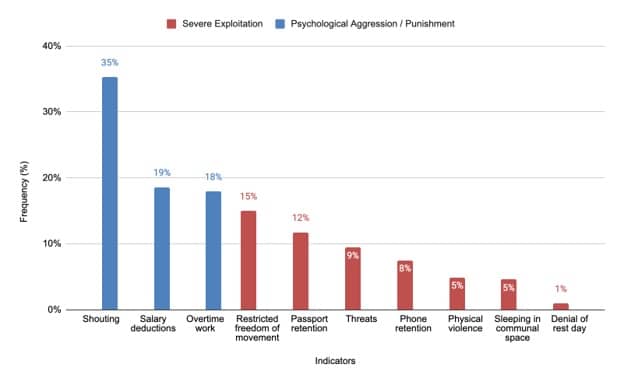
Figure 1: Indicators of severe exploitation and psychological aggression/punishment as reported by employers (%)
There is a notable gap in the literature documenting the demographic profile of employers who engage in exploitative practices. By shedding light on their characteristics, our study offers novel insights into the demographics of employers who resort to exploitation or aggression, providing crucial data for prevention and behaviour-change interventions.
Men were more likely to engage in severe exploitation and impose restrictions as compared to women. While only a minority of our sample were male (24.8%), they represented a larger proportion of employers reporting severe exploitation (35%) but were only marginally more likely to report psychological aggression/non-violent punishment (26%). Specifically, men were 13% more likely to report restricting MDWs from leaving the house and 11% more likely to report verbal abuse. They were also roughly 7% more likely than women to report confiscation of mobile phones, retention of passports, and asking MDWs to work longer hours. Men were marginally more likely to report instances of threats, slapping, punching, kicking, or throwing objects; however, these differences fall within the margin of error and are likely not statistically significant. The findings support existing research suggesting that exploitative practices are shaped by gendered understandings of authority and labour relations. Male employers may be more likely to view domestic work through a hierarchical rather than relational lens, which increases the likelihood of restrictive and controlling practices in employment.
Employers reporting severe exploitation were more likely to be Hong Kong citizens (79%). Employers of Indian origin were also marginally more likely to report severe exploitation as well as psychological aggression. Employers reporting severe exploitation were 15% more likely to employ Indonesian domestic workers, supporting existing evidence that Indonesian workers may be more vulnerable to exploitation and perceived as more obedient by exploitative employers. This finding suggests that employer practices may be shaped by racialised and nationality-based assumptions regarding workers’ obedience and bargaining power.
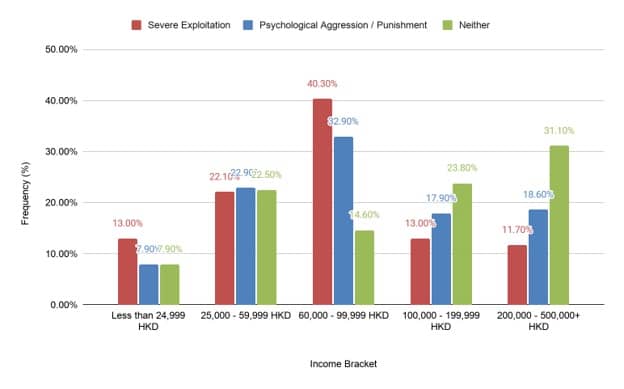
Most employers reporting severe exploitation were employees (54.5%) who held a bachelor’s degree as their highest qualification. Findings indicate that middle-income households were more likely to report severe exploitation and psychological aggression or non-violent punishment. Although they represented only a quarter of the sample, middle-income households accounted for 40% of those reporting severe exploitation and 32% of those reporting psychological aggression (Figure 2).
*1 USD = 7.84 HKD (as of 24 June 2026)
Figure 2. Employers reporting exploitation by income bracket (%)
Low-middle-income households were the second most likely to report both severe exploitation and psychological aggression. By contrast, higher-income households represented nearly 40% of the sample but only 24% of severe exploitation cases. Employers reporting severe exploitation also tended to live in smaller apartments, with 80% residing in homes under 100 sq m (1,075 sq ft), compared with 60% of other employers. Smaller living spaces may place additional strain on relationships with live-in domestic workers, increasing the potential for conflict. Exploitation, therefore, appears to be associated not only with employer attitudes but also with the economic and material pressures of managing care responsibilities within constrained household environments. Households reporting exploitation were also significantly more likely to include elderly members (47% compared with 20% of other households), suggesting that households with care responsibilities may place greater demands on domestic workers while also being dependent on their labour. This finding highlights the intersection between intimate care labour and exploitation.
Taken together, these findings suggest that exploitative practices are in part shaped by the interaction of gendered power relations, care responsibilities, household pressures, economic strain, and broader social hierarchies. These structural factors determine and reinforce power relations and MDW treatment within the intimate setting of the household.
To measure employers’ views of MDWs, a perception scale was included in the survey. The scale was informed by the validated Positive and Negative Perception of Immigrants Scale (PANPIS) to measure immigrant sentiment,[43] with questions adapted to the local context. Most employers saw MDWs as valuable to Hong Kong society, with 75% reporting that they ‘allowed families in Hong Kong to thrive and advance in their careers’, and that ‘they take good care of children and the elderly’. A majority also felt that ‘MDWs add to the cultural diversity of Hong Kong’ (69%). The data indicated some gendered differences in perceptions, with women reporting stronger positive sentiment towards MDWs. Women were also more likely than men to strongly agree that MDWs allow families in Hong Kong to thrive, allow parents to advance in their careers, and take good care of children and elderly people.
During interviews, employers described the contributions that MDWs made to their lives. Six employers noted that their presence eased the burden on families, providing opportunities for locals, particularly women, to pursue careers and increase household income.
I think foreign domestic helpers are a necessity for many families. They are essential and play an important role. Without them, you might have hundreds of thousands of families with only one person able to work.
The findings further emphasise the importance of a gendered analysis, as employers recognise that MDWs play a critical role in redistributing unpaid care labour within Hong Kong households, enabling local women to participate in the labour market. Higher rates of female appreciation for MDWs may reflect that caregiving responsibilities would otherwise fall disproportionately on them. Such assertions reaffirm that Hong Kong’s economic model and care infrastructure are heavily dependent on migrant domestic workers. Employers’ recognition of MDWs as indispensable to household functioning reflects a broader structural dependence on migrant labour, making them central to both household well-being and broader patterns of economic productivity.
Some employers reported that MDWs are an integral part of Hong Kong society, noting, ‘They are somewhat part of the community, and we might view them as half Hong Kong residents.’ These positive perceptions provide a counterpoint to the stereotypes documented by Ho and Sewell, who identified negative characterisations of MDWs in Hong Kong as ‘personal possessions’ or ‘lowly maids’, identifying the commodification of MDWs as symbols of status and wealth.[44] Our findings instead suggest there is widespread recognition and appreciation for their essential role in society, reinforcing their unique position between employment and family life and in the provision of intimate care and relational labour within private households.
The findings suggest that exploitative employers were more likely to perceive financial strain and express restrictive attitudes towards resource sharing. As elaborated by Tan, many employers consider hiring MDWs as financially burdensome because of the high employment-related expenses. This financial strain is further exacerbated when a domestic worker becomes pregnant or unexpectedly terminates her contract, as employers must bear additional costs that create significant financial stress. However, many employers cannot avoid hiring MDWs because alternative childcare arrangements would be even more expensive.[45]
Employers reporting both severe exploitation and psychological aggression were nearly twice as likely to oppose minimum wage increases for MDWs, when compared with other employers (Figure 3). This attitude reflects broader exclusionary social practices documented in the literature, such as MDWs being excluded from minimum wage provisions.[46] The findings suggest that dominant understandings of MDWs as domestic helpers rather than rights-bearing workers contribute to the normalisation of unequal treatment and diminished recognition of rights and workplace harms. The study demonstrates how social perceptions of domestic work shape understandings of deservingness and acceptable treatment, influencing employer behaviour and broader societal responses to exploitation. Support for wage increases among some employers, however, suggests a nuanced picture, demonstrating that a sizable proportion of employers recognise wage inequality in Hong Kong society.
Furthermore, 27% of employers disagreed that MDWs should have access to the same social services as residents, and 21% did not think they should have the same opportunities. These exclusionary attitudes were significantly more common among employers reporting exploitation and psychological aggression. Employers reporting severe exploitation were twice as likely (40%) to oppose equal access to social services and were also significantly more likely to view MDWs as imposing economic costs through higher taxation (Figure 3).
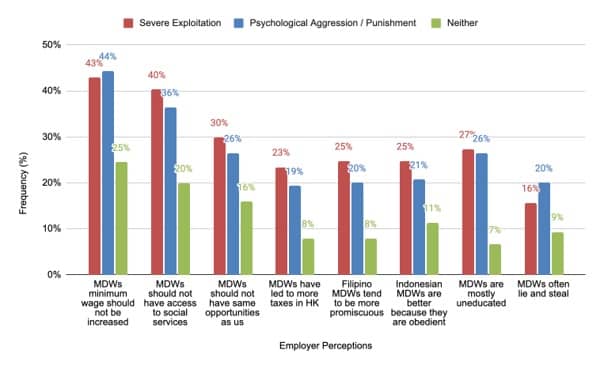
Figure 3. Employer perceptions disaggregated by reported exploitation (%)
The findings indicate that exploitative employers and those with more aggressive management styles are more likely to be concerned that MDWs contribute to resource scarcity in Hong Kong, demonstrating how negative perceptions of MDWs’ societal impact correlate with discriminatory employment practices.
Qualitative data reveal that some employers considered domestic workers a drain on financial resources, in part because they send remittances home and do not contribute to local taxation. As discussed, the minimum allowable wage for domestic workers is significantly lower than that of the general population, estimated at HKD 13–21 (USD 1.66–2.68) per hour, compared to the local minimum wage of HKD 40 (USD 5.10) per hour.[47] Most MDWs in fact do not pay salaries tax in Hong Kong because their earnings fall below the basic tax threshold of HKD 145,000 per year,[48] or roughly HKD 11,000 per month.[49]
I think they’re bringing a very negative impact… 5,000 HKD is a lot of money for her home country. The government does not benefit from this helper, because they send all their money back to their home country. Unlike Singapore and the UAE, where they tax the helper’s salary.
Findings suggest that employer treatment is shaped by broader structural influences, including perceived economic pressures and social norms regarding who is entitled to resources and social protections. Viewed through an intersectional lens, we illustrate how economic concerns intersect with migration status, nationality, and labour market inequalities to shape perceptions of deservingness. The findings revealed gendered differences in these attitudes, with women showing more support than men for an increase in MDWs’ minimum wage and greater support for their access to social services. Men, however, were twice as likely to feel that MDWs have driven up taxes. Women’s more positive perceptions may reflect their closer engagement with the reproductive and care labour performed by MDWs, while men’s more exclusionary views point to the role of gendered power relations in shaping perceptions of entitlement and inclusion.
The survey included statements to measure stereotypical perspectives used to categorise certain diasporas of migrant workers. While most employers disagreed, 16.3% reported that ‘MDWs are mostly uneducated’. IOM research indicates that 25% of MDWs in Hong Kong have tertiary-level education, with the same true for half of Filipino migrants.[50] Both employers reporting severe exploitation and psychological aggression were three times more likely (27%) than other employers (9%) to view MDWs as uneducated (Figure 3). Racist stereotypes linked to MDWs’ ethnic origin may reinforce perceptions of workers as inferior or unworthy, thereby normalising exploitative treatment and enabling employers to play down the harms caused by exploitative or psychologically aggressive behaviour. The persistence of these stereotypes helps explain how exploitative practices may become normalised within domestic work settings.
A minority of employers endorsed negative stereotypes about MDWs, with 14.1% agreeing that domestic workers often lie and steal. Employers reporting psychological aggression were almost twice as likely to hold this view (20%), while severely exploitative employers were also more likely to agree. Additionally, 11.4% of employers endorsed the stereotype that MDWs carry unknown or rare diseases, reflecting how racial prejudice may pathologise migrant workers and generate anxieties surrounding their presence within the household. Although these views were held by a minority, the findings indicate how prejudices may justify control over MDWs as they represent a physical threat. These findings support arguments that migrant domestic workers occupy a uniquely vulnerable position within global labour hierarchies.
Semi-structured interviews further revealed stereotypes portraying MDWs as dishonest, sexually threatening, unhygienic, and poorly educated:
When I was young, I read a book at the library that taught employers how to guard against domestic workers. It mentioned that they might steal money or seduce male employers.
The data support other research that MDWs occupy a ‘position of inferiority’ within Hong Kong society and are perceived as dishonest or sexually threatening.[51] Such perceptions may legitimise unequal power relations, normalise coercive forms of control, and reduce social condemnation of exploitative practices, including severe administrative exploitation, violence, and psychological aggression used to regulate workers’ behaviour.
Our research challenges the literature on the relationship between income and perceptions, showing that perceived competition for resources and economic insecurity may contribute to more exclusionary attitudes towards migrant workers. Low-income households are four times more likely than high-income households to believe MDWs often lie and steal, and twice as likely to think they carry unknown diseases. Middle-income households were the least supportive of equal opportunities, and they were accordingly the most likely to deduct salaries, hold onto phones, restrict freedom of movement, or use shouting or threats. In contrast, high-income households were more supportive of MDWs’ access to social services and were 31% more likely to advocate for raising their minimum wage. Findings show that exploitative practices may be linked not only to prejudice but also to the pressures of balancing care needs and household finances within constrained economic circumstances.
The study was interested in employers’ attitudes towards the MDWs within their own household, as it was hypothesised that these may differ from their broad perceptions about MDWs in general.
Employers recognised the impact of MDWs on their lives, with 88.6% reporting gratitude for their household contribution. A large majority of employers also felt that their MDWs relieved them of household burdens (87%) and enabled them to devote more time to their career (83%). Employers evaluated their relationships with MDWs positively, overwhelmingly reporting that they had a good relationship (80%) and trusted the workers in their household (72%). Quantitative data support that for most, the relationship was conceptualised through a familial rather than purely contractual lens, with employers largely reporting MDWs are a ‘part of the family’. These findings highlight the complex intertwining of intimacy and employment characteristic of domestic work and demonstrate how perceptions of closeness may coexist with unequal power relations and, in some cases, exploitative practices. MDWs’ contribution to the household was also widely acknowledged as valuable during qualitative interviews.
It makes us appreciate the kind of work our helper does day to day, because otherwise, we wouldn’t be able to have jobs and free time.
Our findings underscore the relational and affective dimensions of domestic and care work. Consistent with scholarship on intimate labour, employers frequently expressed positive attitudes towards MDWs, such as gratitude, trust, and family inclusion, including those who reported behaviours classified as exploitative or psychologically aggressive (Figure 4).
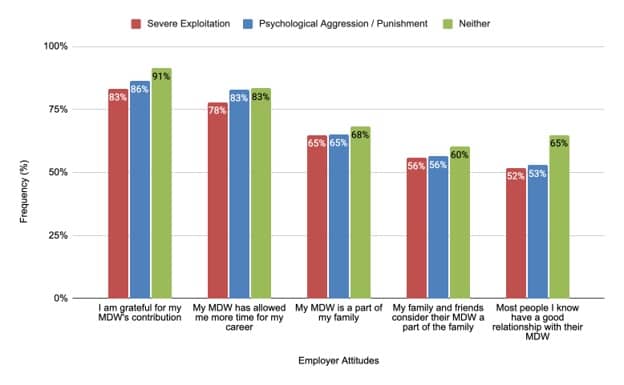
Figure 4. Employer positive attitudes disaggregated by reported exploitation (%)
This demonstrates that positive affective relationships do not necessarily translate into equitable labour practices, reflecting a central tension within intimate labour. Domestic work, therefore, can be characterised as a form of intimate labour comprising the coexistence of emotional intimacy and structural inequality, whereby workers may be regarded as trusted or even family-like figures while remaining subject to employer control and unequal employment conditions. Employers who did not report exploitative practices were more likely to perceive positive treatment of MDWs as a broader social norm. This suggests that ethical treatment may be influenced by perceptions of collective norms around what constitutes appropriate behaviour in employment relationships. However, when viewed through an intersectional lens, these positive perceptions do not eliminate the unequal power relations embedded within domestic work, as MDWs continue to occupy a structurally subordinate position shaped by their intersecting identities.
A significant proportion of employers, particularly those reporting exploitation, demonstrated controlling attitudes. Over one third (36.9%) felt that their domestic worker should focus solely on work, not on their personal life. This sentiment was more pronounced among employers who reported severe exploitation (51%) and psychological aggression and punishment (45%) (see Figure 5).
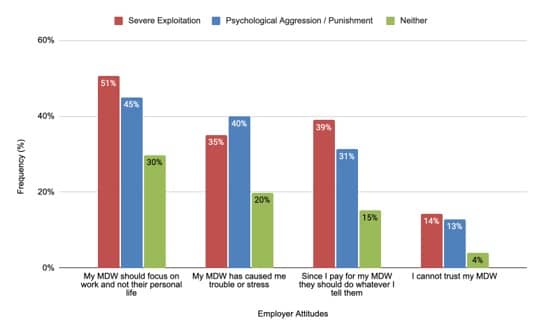
Figure 5: Employer negative attitudes disaggregated by reported exploitation
These employers were also more than twice as likely to expect obedience from their MDWs, with roughly a third reporting, ‘since I pay for my domestic worker, they should do whatever I tell them to do’. It is likely that prejudice towards MDWs, more prevalent among exploitative employers, including concerns around mistrust, disease and a lack of education, results in controlling attitudes and behaviours and justifies coercive behaviour, restrictions on freedom of movement, document withholding, and even violence. These findings directly substantiate Siu’s ‘subjugation model’, which demonstrates how employers assert dominance over MDWs.[52] More broadly, they reflect the structural organisation of domestic work as a form of intimate and embodied labour. Because domestic work is performed within the private household and involves workers’ physical presence, emotional labour, and everyday interactions with family members, employers may come to view not only labour but also workers’ time and personal autonomy as subject to managerial control. As scholars of embodied and intimate labour argue, the live-in arrangement blurs the boundaries between employment and private life, encouraging expectations of constant availability, obedience, and deference rather than recognising domestic workers as rights-bearing employees with personal lives.[53] Some employers’ expectations of total compliance reflect individual prejudice as well as the broader labour regime governing migrant domestic work, in which legal dependency, isolation, and unequal social relations facilitate the normalisation of control and subordination.
Around one third (29.4%) of employers reported dissatisfaction with their MDWs, stating that they had caused them trouble or stress (Figure 5). This was substantially more common among employers reporting psychological aggression or non-violent punishment and somewhat more common among those reporting severe exploitation, suggesting that workplace tensions may contribute to the use of coercive or controlling management practices. Employers reporting exploitation or psychological aggression were also more likely to report low levels of trust in their MDWs, indicating a relationship between suspicion, conflict, and mistreatment.
Financial concerns again emerged as an important factor influencing employer attitudes. Survey data and qualitative interviews indicate that some viewed hiring MDWs as an economic burden that strained family resources. In contrast, others worried about ‘wasting money’ on workers who did not meet expectations. Low- and low-middle-income households may have expected more from their MDWs and been disappointed, as they were three times more likely to expect their MDWs to ‘do whatever I tell them’ and 15% more likely to report that their MDWs had caused them trouble or stress. There were also concerns about MDWs taking advantage of generous employers, revealing underlying anxieties about financial resources. These concerns focus specifically on the financial investment of hiring MDWs and potential losses if workers do not meet expectations. The findings correspond with IOM’s 2020 data, which cite employers’ economic concerns, including reluctance to pay higher wages beyond the minimum allowable wage; worries about additional costs beyond salaries; reluctance to provide better working conditions if it involved additional financial outlay; and concerns about replacing workers who did not meet expectations.[54] The findings suggest that financial concerns and economic strain shape expectations and control dynamics within households.
While both genders showed appreciation for their MDWs, women demonstrated stronger sentiments: they were 24.7% more likely to strongly agree that they were grateful for their workers and more likely to consider them a part of their family. Women were 19% more likely than men to feel that MDWs helped them with their household burden and felt more strongly that they had a positive relationship with their workers. Lower reported rates of severe exploitation, including controlling behaviour among women employers, demonstrate that women’s increased positive regard for MDWs corresponds with more ethical treatment in the household. This finding highlights gendered differences in employment relationships and attitudes, suggesting perhaps that, as women employers have historically borne a larger share of domestic labour, they may view domestic work through a relational lens, emphasising emotional and intimate labour, while male employers enact more hierarchical relations, emphasising dominance and top-down control. Rather than reflecting isolated employer behaviours, these findings illustrate how broader social norms, migration regimes, and unequal power relations are translated into everyday household practices.
This article examined how employers’ attitudes, perceptions, and broader structural factors relate to the treatment of migrant domestic workers within Hong Kong households. The study demonstrates that prejudices, stereotypes, and exclusionary attitudes towards MDWs are a driver of exploitative behaviour within households. Severe exploitation and psychological aggression were associated with stronger exclusionary and controlling attitudes towards MDWs, and with harmful stereotypes portraying workers as uneducated, dishonest, or inferior. We argue that perceptions of deservingness, entitlement, and worker rights are shaped by intersecting inequalities of gender, class, nationality, and migration status. Employers reporting exploitation were more likely to oppose equal access to services and opportunities for workers and to express concerns about resource scarcity. Racialised stereotypes regarding obedience, trustworthiness, and vulnerability appeared to legitimise unequal treatment. Viewed through an intersectional lens, these findings show how social hierarchies can be reproduced within domestic employment relationships. As well as being influenced by attitudes, employer treatment is also shaped by broader structural influences, including gendered power relations, care responsibilities, economic pressures, and social norms. The overrepresentation of male employers, middle-income households, households with elderly dependents, and smaller living spaces among those reporting exploitative practices suggests that exploitation is embedded within the everyday struggles of care provision, financial anxieties, and household management, rather than arising solely from individual prejudice or malicious intent.
We demonstrate Hong Kong’s structural dependence on migrant domestic labour and the gendered redistribution of care work. Most employers acknowledged that MDWs relieved household burdens, enabled dual-income livelihoods, and reduced the unpaid care burden that would otherwise fall disproportionately on women. The greater appreciation expressed by female employers, alongside their lower reported rates of exploitative treatment, suggests that closer engagement with caregiving responsibilities may influence attitudes towards MDWs and their treatment within the household. This supports prior research that employment relations are shaped by gendered understandings of authority, as male employers enact more hierarchical employment relations, associated with controlling behaviour, while women may be more likely to view domestic work as relational, emphasising emotional closeness and intimacy. Yet our findings highlight a central tension within domestic work as a form of intimate labour by revealing the coexistence of emotional closeness and structural inequality. Many employers described MDWs as trusted, appreciated, and even part of the family, yet these positive sentiments coexisted with expectations of obedience, restrictions on autonomy, and even exploitative practices. This challenges assumptions that positive interpersonal relationships mitigate exploitation and instead demonstrates how care, dependency, affection, and control can become intertwined to obscure unequal power relations and normalise forms of control that extend into workers’ everyday lives.
In summary, we argue that exploitative labour relations are shaped not only by individual employer attitudes and behaviour but also by broader social and economic inequalities, gendered norms, migration governance frameworks, and racialised cultural narratives. Addressing these issues, therefore, requires strengthened labour protections and improved migration governance as well as longer-term efforts to challenge harmful stereotypes, shift societal norms, and foster a culture of dignity and respect for domestic workers. Understanding employer attitudes is critical to improving employment conditions and advancing more equitable approaches to domestic work. This article also reveals avenues for future research. Qualitative approaches could provide deeper insight into how employers justify, normalise, or contest exploitative practices in their everyday interactions with MDWs. Further research could explore how positive perceptions and appreciation towards MDWs coexist with exclusionary attitudes and coercive practices. Comparative research across destination countries would also be valuable in identifying how differing legal, cultural, and socioeconomic contexts shape employer attitudes and employment practices. Finally, similar investigations could be extended to other sectors associated with elevated risks of labour exploitation, including fishing and agriculture, to examine whether comparable dynamics of dependence, control, and gendered and racialised labour hierarchies emerge.
Isla Mairi Wilson is a social researcher and Chief Programme Officer at Migrasia, a Hong Kong-based think and do tank with the goal of eliminating labour exploitation and forced labour among migrant workers. In this position, she leads anti-trafficking interventions and conducts research on labour, global migration, human trafficking, and gender equality. Email: isla@migrasia.org
Yuniar Paramita Sari is a Research Manager at Migrasia. Her interdisciplinary work focuses on migration, human trafficking, labour, and violence against women and children. She received her PhD in Humanities and Social Sciences from RMIT University, Australia, and is the author of Individuals Involved in Human Trafficking in Indonesia (Springer, 2025). Email: yuniar@migrasia.org
[1] T S Sumerlin, J H Kim, and R Y Chung, ‘Female migrant domestic worker experiences during the COVID-19 pandemic in Hong Kong: A qualitative study’, PLOS Global Public Health, vol. 5, no. 11, 2025, pp. e0005399, https://doi.org/10.1371/journal.pgph.0005399.
[2] J Ho and A Sewell, ‘Exploring mediated representations of migrant domestic workers in the Chinese-language media in Hong Kong’, Ethnicities, vol. 23, issue 6, 2023, pp. 931–961, https://doi.org/10.1177/14687968231164721.
[3] Under a mandatory Condition of Stay imposed by the Hong Kong Immigration Department, all foreign domestic helpers must live and work at their employers’ residence as stated in the Standard Employment Contract (SEC), a requirement that has been in effect since 1 April 2003.
[4] S J Tan, ‘When the Home Is Also the Workplace: Women migrant domestic workers’ experiences with the “live-in” policy in Singapore and Hong Kong’, Anti-Trafficking Review, issue 20, 2023, pp. 75–91, https://doi.org/10.14197/atr.201223205.
[5] Y P Sari and I Wilson, Invisible Struggles: Challenges and Support Seeking Behaviours of Indonesian Domestic Workers in Hong Kong, Migrasia, Hong Kong, 2025.
[6] D Lindgren et al., Public attitudes towards migrant workers in Japan, Malaysia, Singapore, and Thailand, ILO, Bangkok, 2019.
[7] A Hn Chan, ‘Live-in foreign domestic workers and their impact on Hong Kong’s middle class families’, Journal of Family and Economic Issues, vol. 26, issue 4, 2005, pp. 509–528, https://doi.org/10.1007/s10834-005-7847-4.
[8] K Crenshaw, ‘Demarginalizing the Intersection of Race and Sex: A Black Feminist Critique of Antidiscrimination Doctrine, Feminist Theory, and Antiracist Politics’, University of Chicago Legal Forum, vol. 1989, no. 1, 1989, pp. 139–167.
[9] Ho and Sewell.
[10] I D Lui et al., ‘“We also deserve help during the pandemic”: The effect of the COVID-19 pandemic on foreign domestic workers in Hong Kong’, Journal of Migration and Health, vol. 3, 2021, pp. 100037, https://doi.org/10.1016/j.jmh.2021.100037.
[11] A Sim, ‘Organising Discontent: NGOs for Southeast Asian Migrant Workers in Hong Kong’, Asian Journal of Social Science, vol. 31, issue 3, 2003, pp. 478–510, https://doi.org/10.1163/156853103322895351.
[12] Justice Centre Hong Kong, Coming Clean: The Prevalence of Forced Labour and Human Trafficking for the Purpose of Forced Labour amongst Migrant Domestic Workers in Hong Kong, Justice Centre, Hong Kong, 2016.
[13] M Amrith, The Invisible Labour of Female Migrants in the Care Sector, UNU-GCM, Barcelona, 2015.
[14] C Liang, ‘Maid in Hong Kong: Protecting foreign domestic workers’, Migration Policy Institute, 20 October 2016, retrieved 11 July 2026, https://www.migrationpolicy.org/article/maid-hong-kong-protecting-foreign-domestic-workers.
[15] I Huynh et al., Overview of International Migrant Workers in the Care, Hospitality, and Entertainment and Informal Economy Sectors in Hong Kong SAR, China, International Organization for Migration, Hong Kong SAR, China, 2023.
[16] Amrith.
[17] S Kouba and N Baruah, Access to the labour market for admitted migrant workers in Asia and related corridors, International Labour Organization, Bangkok, 2019.
[18] Amrith.
[19] The definition of forced labour, as established in the ILO Forced Labour Convention, 1930 (No. 29) is ‘all work or service which is exacted from any person under the threat of a penalty and for which the person has not offered himself or herself voluntarily.’
[20] J Quirk, C Robinson, and C Thibos, ‘Editorial: From Exceptional Cases to Everyday Abuses: Labour exploitation in the global economy’, Anti-Trafficking Review, issue 15, 2020, pp. 1–19, https://doi.org/10.14197/atr.201220151.
[21] K Skrivankova, Between decent work and forced labour: Examining the continuum of exploitation, Joseph Rowntree Foundation, 2010.
[22] R K Kawasaki and Y Ikeda, ‘Network analysis of attitudes towards immigrants in Asia’, Applied Network Science, vol. 5, issue 1, 2020, art. 85, https://doi.org/10.1007/s41109-020-00315-w.
[23] M Tunon and N Baruah, ‘Public attitudes towards migrant workers in Asia’, Migration and Development, vol. 1, issue 1, 2012, pp. 149–162, https://doi.org/10.1080/21632324.2012.718524.
[24] Ibid.
[25] Ibid.
[26] N P Siang, ‘Inequality in Equality: The Plight of Migrant Workers in Singapore’, Pioneer Road: Journal of Undergraduate Research, 2021, pp. 34–38.
[27] Ibid.
[28] Kawasaki and Ikeda.
[29] Lindgren et al.
[30] Ibid.
[31] H J Ladegaard, ‘Demonising the cultural Other: Legitimising dehumanisation of foreign domestic helpers in the Hong Kong press’, Discourse, Context & Media, vol. 2, issue 3, 2013, pp. 131–140, https://doi.org/10.1016/j.dcm.2013.06.002.
[32] D Pascoe and J Tomassetti, ‘Judicial attitudes towards foreign domestic helpers in the Hong Kong criminal courts’, Asia Pacific Law Review, vol. 32, issue 1, 2024, pp. 123–148, https://doi.org/10.1080/10192557.2023.2285531.
[33] H J Ladegaard, The discourse of powerlessness and repression: Life stories of domestic migrant workers in Hong Kong, Routledge, Abingdon, 2016.
[34] W Palmer, ‘International migration and stereotype formation: Indonesian migrants in Hong Kong’, Journal of International Migration and Integration, vol. 21, issue 3, 2020, pp. 731–744, https://doi.org/10.1007/s12134-019-00680-1.
[35] Pascoe and Tomassetti.
[36] K A Chang and L H M Ling, ‘Globalization and its intimate other: Filipina domestic workers in Hong Kong’, in M H Marchand and A S Runyan (eds.), Gender and global restructuring: Sightings, sites and resistances, Routledge, Abingdon, 2010, pp. 60–77.
[37] R M-k Chu, ‘More than gratitude, Hong Kong’s foreign domestic workers are due respect’, South China Morning Post, 16 June 2011, retrieved 27 August 2026, https://www.scmp.com/comment/opinion/article/3137306/more-gratitude-hong-kongs-foreign-domestic-workers-are-due-respect.
[38] Ho and Sewell.
[39] The remaining 2.6% of respondents selected the option ‘Prefer not to say’.
[40] V Braun and V Clarke, ‘Using Thematic Analysis in Psychology’, Qualitative Research in Psychology, vol. 3, issue 2, 2006, pp. 77–101, https://doi.org/10.1191/1478088706qp063oa.
[41] M A Straus, Conflict Tactics Scales (CTS) [Database record], APA PsycTests, 1979, https://doi.org/10.1037/t02125-000.
[42] For the purposes of this analysis, salary deductions and overtime work are not classified as severe administrative forms of exploitation, as Hong Kong law permits wage deductions under specific circumstances (e.g. damage to property) and does not impose statutory limits on the working hours of domestic workers beyond the mandatory weekly rest day.
[43] A Panno et al., ‘A measure of positive and negative perception of migration: Development and psychometric properties of the Positive and Negative Perception of Immigrants Scale (PANPIS)’, Analyses of Social Issues and Public Policy, vol. 23, issue 1, 2023, pp. 73–105, https://doi.org/10.1111/asap.12338.
[44] Ho and Sewell.
[45] S J Tan, Gendered Labour, Everyday Security and Migration: An Examination of Domestic Work and Domestic Workers’ Experiences in Singapore and Hong Kong, Routledge, Abingdon, 2022.
[46] Liang.
[47] This estimate is based on a 2023 report, considering the average number of hours worked for 86% of MDW respondents (10–16 hours per day), and considering the current Minimum Allowable Wage of HKD 5,100 per month. See Huynh et al.
[48] Inland Revenue Department, 2026-27 Budget Tax Measures, 2026, retrieved 28 August 2026, https://www.ird.gov.hk/eng/faq/budget2026_27.htm.
[49] The Minimum Allowable Wage for MDWs as of August 2026, is HKD 5,100 per month, not including food allowance.
[50] Huynh et al.
[51] Ho and Sewell; N Constable, Maid to order in Hong Kong: Stories of migrant workers (2nd Edition), Cornell University Press, Ithaca, 2017; J Ho and M M Chiu, ‘Exploring the media representation of migrant domestic workers in Hong Kong: A mixed-methods analysis’, Review of Communication, vol. 25, issue 3, 2025, pp. 149–163, https://doi.org/10.1080/15358593.2025.2485065; Ladegaard, 2016.
[52] K Siu, Chinese Migrant Workers and Employer Domination: Comparisons with Hong Kong and Vietnam, Palgrave Macmillan, Singapore, 2020.
[53] See, on embodied inequality in domestic work: E M De Cassanova, ‘Embodied Inequality: The Experience of Domestic Work in Urban Ecuador’, Gender & Society, vol. 27, issue 4, 2013, pp. 561–585, https://doi.org/10.1177/0891243213483895; on the construction of ‘productive and deferential bodies’ among Indonesian domestic workers in Malaysia: P Y Hierofani, ‘Productive and deferential bodies: The experiences of Indonesian domestic workers in Malaysia’, Gender, Place & Culture, vol. 28, issue 12, 2021, pp. 1738–1754, https://doi.org/10.1080/0966369X.2020.1855121; and on the blurring of work and private life in employers’ homes and its implications for the regulation and control of migrant domestic workers: B S A Yeoh and S Huang, ‘Transnational Domestic Workers and the Negotiation of Mobility and Work Practices in Singapore’s Home‐Spaces’, Mobilities, vol. 5, issue 2, 2010, pp. 219–236, https://doi.org/10.1080/17450101003665036.
[54] J Guse, Survey Report: Understanding and Attitudes of Employers of Migrant Domestic Workers towards Ethical Recruitment and Decent Work Principles in Hong Kong Special Administrative Region, China, International Organization for Migration, Hong Kong, 2020.